Is Therapy Working? Signs Therapy Is Helping (Even If It Feels Hard)

At some point, many people in therapy ask a hard but important question: Is this actually helping? If you’re investing time, money, and emotional energy, it makes sense to want clarity.
Therapy doesn’t move in straight lines. Feeling worse before feeling better, revisiting old patterns, or questioning progress can all be part of effective work. This article breaks down realistic signs that therapy is working, common misconceptions that create unnecessary doubt, and what to do if your therapy truly isn’t meeting your needs.
Sometimes progress in therapy doesn’t feel like “getting better” right away.
Sometimes it feels like questioning old roles, noticing patterns you can’t unsee, or realizing parts of your identity were built around survival. That can feel disorienting. Growth doesn’t always feel soft or reassuring in the moment, sometimes it feels like grief, discomfort, or the loss of what once felt familiar.
Signs Therapy Is Working (Even When It Feels Hard)
Therapy doesn’t always feel relieving in the moment. In fact, meaningful progress often looks quieter, slower, and more internal than people expect.
Some signs therapy may be working include:
Increased awareness of your thoughts, emotions, or patterns, even when they’re uncomfortable
Noticing changes in how you respond to situations outside of sessions
Feeling more emotionally regulated, even if challenges still exist
Developing language for experiences that once felt confusing or overwhelming
Feeling safer being honest in therapy, even about difficult topics
Progress doesn’t always mean fewer emotions. Sometimes it means you’re able to stay present with them instead of being overtaken by them.
Common Myths About Therapy Progress
Unrealistic expectations can make therapy feel ineffective when it isn’t.
Some common myths include:
“If therapy is working, I should feel better every week.”
“If I’m crying or emotional, something must be wrong.”
“If my therapist challenges me, they don’t understand me.”
“If I’m still struggling, therapy must not be helping.”
Therapy often brings up what’s been avoided or suppressed. Discomfort alone is not a sign that therapy is failing.
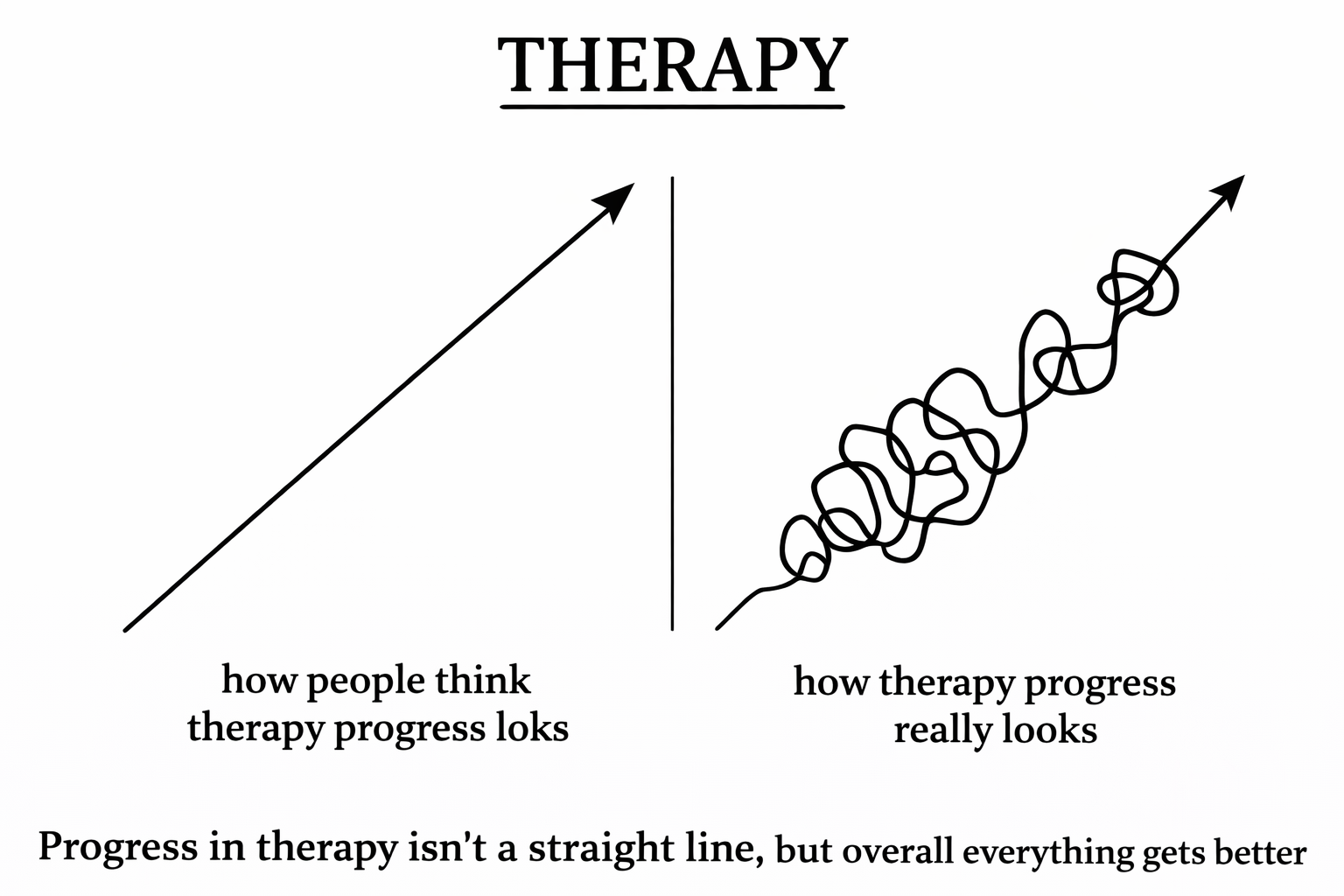
This image shows the difference between how people expect therapy to work and how it actually works. Healing isn’t a straight line — it includes ups, downs, and detours. Even when it feels messy, growth is still happening and progress is being made.
Signs Therapy May Not Be the Right Fit Right Now
Feeling stuck doesn’t automatically mean therapy isn’t working — but there are times when something may need to change.
You might consider reevaluating your therapy if:
You consistently feel dismissed, judged, or misunderstood
Sessions feel directionless without clear intention or collaboration
You don’t feel safe discussing concerns about the process itself
Your distress is increasing over time without support or stabilization
A good therapeutic relationship allows room for feedback, adjustment, and honest conversation about what is or isn’t helping.
What to Do If You’re Feeling Stuck in Therapy
If you’re questioning your progress, the first step is often to talk about it — in therapy.
This might include:
Sharing that you feel unsure about progress
Asking to revisit goals or focus areas
Discussing pacing or approach
Exploring whether a different modality or referral may be helpful
Sometimes therapy needs more time. Sometimes it needs a shift. And sometimes the most ethical next step is finding a different kind of support. None of these options mean you’ve failed.
If you’re questioning whether therapy is working, that question itself matters. Sometimes therapy needs more time. Sometimes it needs a shift in pace, approach, or focus. And sometimes it’s okay to acknowledge that a different fit may serve you better.
A consultation can help you sort through what’s actually happening — whether you’re in a normal phase of deeper work, feeling stuck in a way that needs attention, or simply needing a different kind of support. You don’t have to figure that out alone.