The Sixth Stage of Grief: Emotional Alchemy and Finding Meaning After Loss
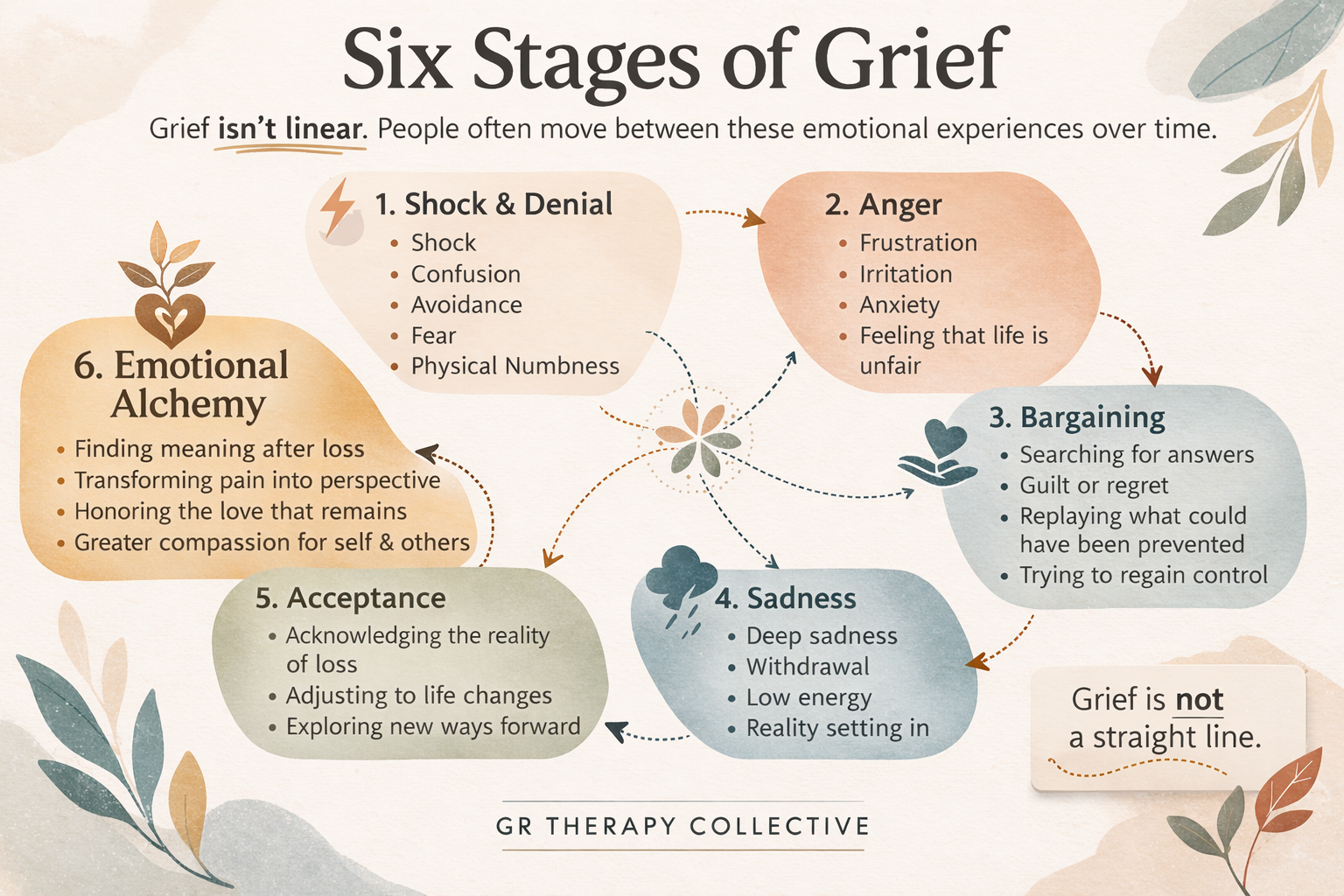
Most people are familiar with the five stages of grief introduced by Elisabeth Kübler-Ross: denial, anger, bargaining, depression, and acceptance. These stages have helped many people better understand the complex emotions that often accompany loss.
At the same time, grief rarely unfolds in a neat or predictable order. People may move back and forth between different emotions, revisit earlier stages, or experience several feelings at once. Grief is deeply personal and does not follow a straight line.
In recent years, some therapists and researchers have begun describing a possible sixth stage of grief, sometimes referred to as emotional alchemy.
What Is Emotional Alchemy?
Alchemy traditionally refers to the idea of transforming something heavy or difficult into something meaningful or valuable. In the context of grief, emotional alchemy describes the process of gradually integrating painful experiences in ways that deepen perspective, compassion, and meaning.
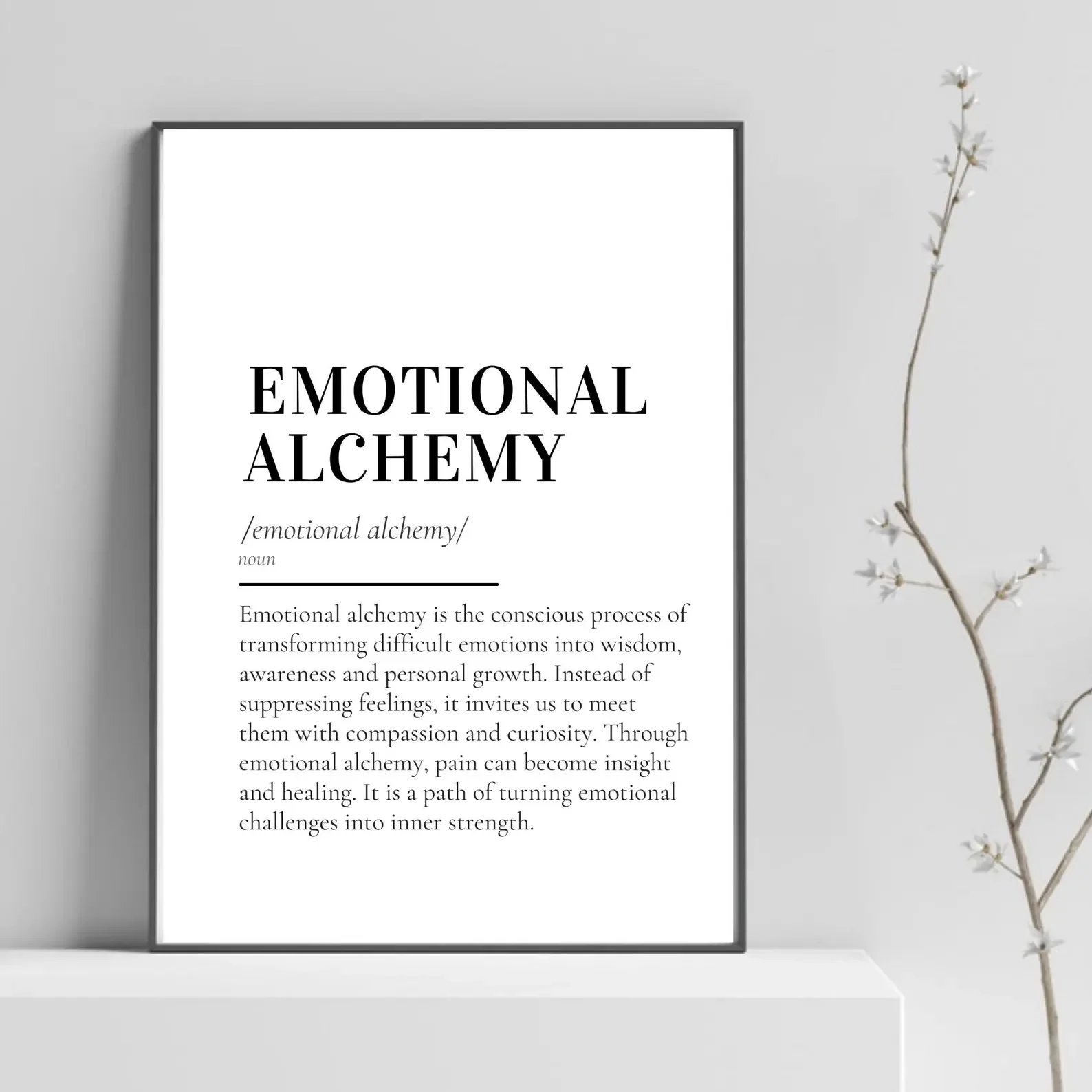
This does not mean that loss becomes “good,” or that grief disappears. Rather, emotional alchemy reflects the way that over time, some people begin to notice how grief has changed them or shaped the way they move through life.
Emotional alchemy might look like:
Developing a deeper appreciation for relationships
Becoming more compassionate toward others experiencing loss
Re-evaluating priorities or what truly matters
Discovering personal strengths that were not visible before
Feeling motivated to help others or give back in meaningful ways
These shifts often emerge slowly as people process and integrate their grief.
Grief and Meaning Can Exist at the Same Time
An important part of this idea is recognizing that finding meaning does not erase grief.
Many people continue to carry sadness, longing, or love for what has been lost. At the same time, they may begin to notice ways the experience has shaped their perspective or deepened their understanding of themselves and others.
Grief and growth are not opposites. They can exist together.
Grief Is Not Linear
It is also important to remember that grief does not move in a straight progression from one stage to the next. People often revisit different emotions at different times.
Moments of acceptance can coexist with waves of sadness. Periods of peace can be followed by renewed feelings of loss. This is a natural part of the grieving process.
The idea of emotional alchemy simply acknowledges that over time, many people begin to integrate their experiences in ways that support healing, perspective, and personal growth.
How Therapy Can Support the Grieving Process
Grief can be a deeply complex and sometimes isolating experience. Therapy can offer a supportive space to explore emotions, memories, and the impact of loss at your own pace.
Approaches such as trauma-informed therapy, Internal Family Systems (IFS), mindfulness, somatic therapy, Reiki, and EMDR can help people gently process grief while reconnecting with their internal resources and sense of stability.
These approaches recognize that grief is not only emotional but can also affect the body, nervous system, and sense of identity.
Grief Support in Grand Rapids, Michigan
If you are navigating grief or loss, you do not have to go through it alone.
GR Therapy Collective offers trauma-informed therapy in Grand Rapids, Michigan, supporting individuals who are experiencing grief, trauma, anxiety, depression, and life transitions. Our therapists integrate approaches such as EMDR, Internal Family Systems, somatic therapy, and mindfulness to support healing and emotional wellbeing.
Reaching out for support can be an important step toward processing loss and reconnecting with yourself in meaningful ways.